What we mean by autonomous finance


50 years of buying enterprise software has produced a system for everything – a ledger of record, a tool for every three-letter process, a dashboard on top of each – and yet the close lands in the second week, cash gets reconciled in spreadsheets, and revenue that was booked wrong in Q1 doesn’t surface until Q3.
The industry's answer has always been more software: another dashboard, another anomaly flagged, another recommendation for a human to chase down.
We started Maximor because we believe that was never the right diagnosis. Finance automation didn't stall because the tools were weak. It stalled because the work was never in the tools.
The human runtime
Walk into any finance organization and ask where the logic lives. Not the data – the logic.
Why does this customer’s contract get recognized the way it does?
Why is that vendor paid on different terms than the one next to it?
What counts as material at 11pm on day four of the close?
Every finance team on earth runs on a policy that is written down nowhere. Instead, the answers live in a controller’s head, in an analyst’s inbox, in a worksheet named FINAL_v7_USE_THIS. ERPs then record the outcomes of those judgments faithfully. They have never once captured the judgment itself.
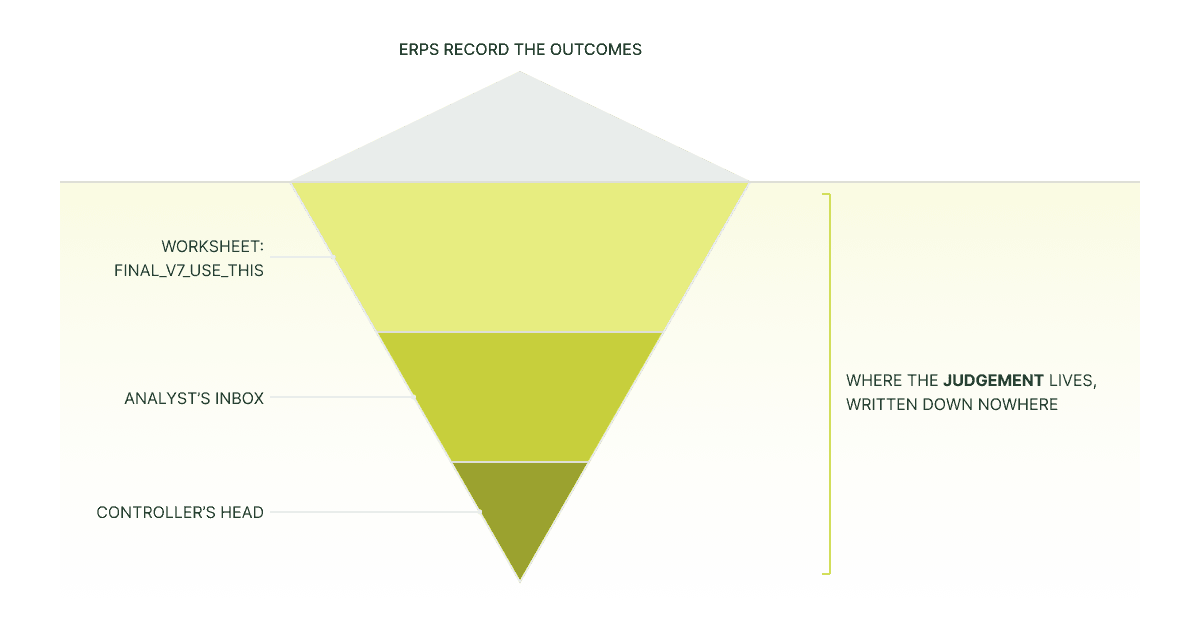
There’s a name for this arrangement: human runtime. Every finance system ever sold has shipped within this structure. But it’s deeply flawed.
The software holds the records. But people still execute the process – interpret the contract, apply the policy, catch the exception – at human speed and human cost. Once you see it, you can’t unsee it. Within this system, the software is nothing more than a filing cabinet people work next to.
That’s why buying more software didn’t fix the close. You can’t upgrade a runtime by adding another system of record. What’s changed, finally, is that the runtime itself is now replaceable.
What autonomous finance means
Autonomous finance is our name for what replaces human runtime. It works by sitting on top of the systems you already run – the ERP, the CRM, the payroll system, the banks. It doesn’t ask you to migrate anything. It learns how your team actually operates by reading your contracts, your policies, your past decisions and their exceptions. Where nothing was ever written down, it asks why. Then it does the work. Bills the customer. Applies the cash. Books the accrual. Reconciles the ledger.
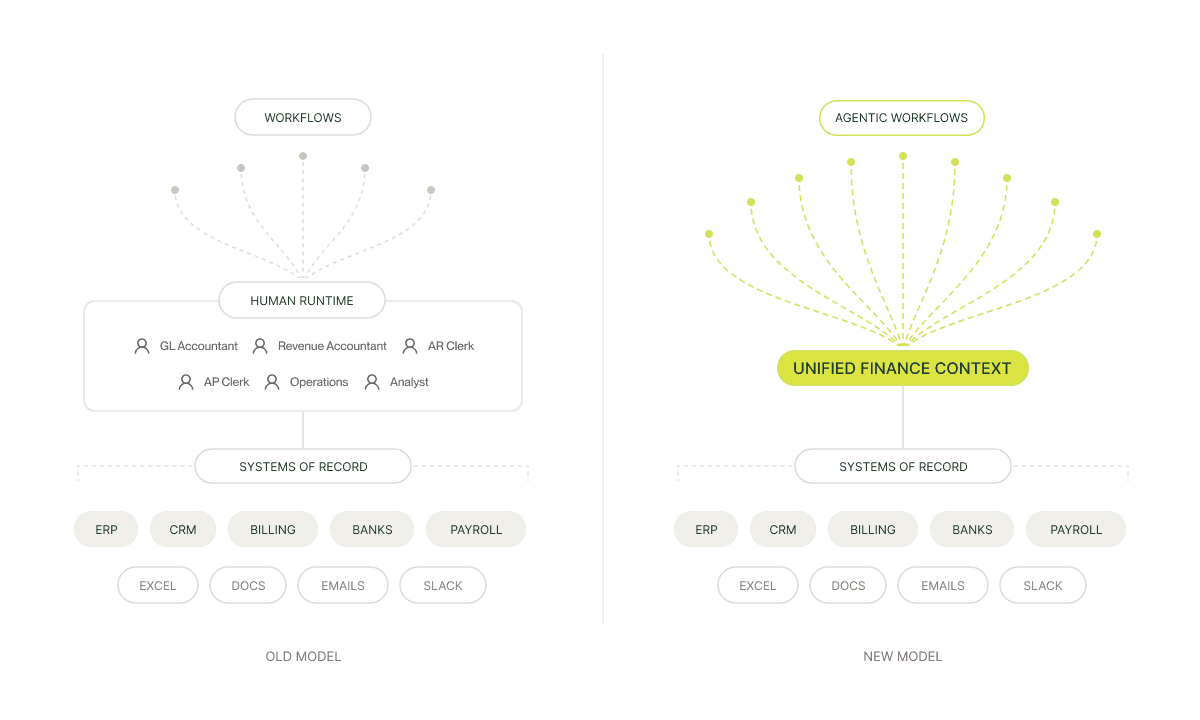
When it’s confident, it acts. When it isn’t, it escalates to your team – and remembers the answer, so it never asks twice.
Every action it takes carries its own evidence: what it did, why, and based on what. Being audit-ready becomes a property of the system.
Notice what’s missing from that description: no dashboard telling you what’s wrong and no recommendation waiting for a human to act on it.
Software that stops one step short of doing the work isn’t automation. It’s homework.
Here’s what our system looks like in practice:
An AI company sells on consumption. Every contract negotiated is effectively its own pricing model – different meters, different commitments, different true-ups. Traditional billing systems demand standardized pricing at implementation time, which is precisely what a company that’s constantly repricing cannot do. Billing leaks, revenue recognition drifts, and finance becomes the reason sales can’t sign creative deals. Autonomous finance reads each contract and derives the billing and revenue logic from the contract itself. There’s no longer a ceiling on how the business is allowed to price.
A consumer-goods distributor doesn’t care about software categories. They care about one number: how fast a dollar comes back after it goes out. That number lives across payables, receivables, inventory, and cash at once – four things the industry decided decades ago to sell as separate products. Autonomous finance runs them as one, because for this business they are one. The result isn’t just a faster close. It’s a shorter cash conversion cycle – which was the point all along.
Why now
So why is this possible now? The fashionable answer is intelligence: the models got smart. True, but incomplete.
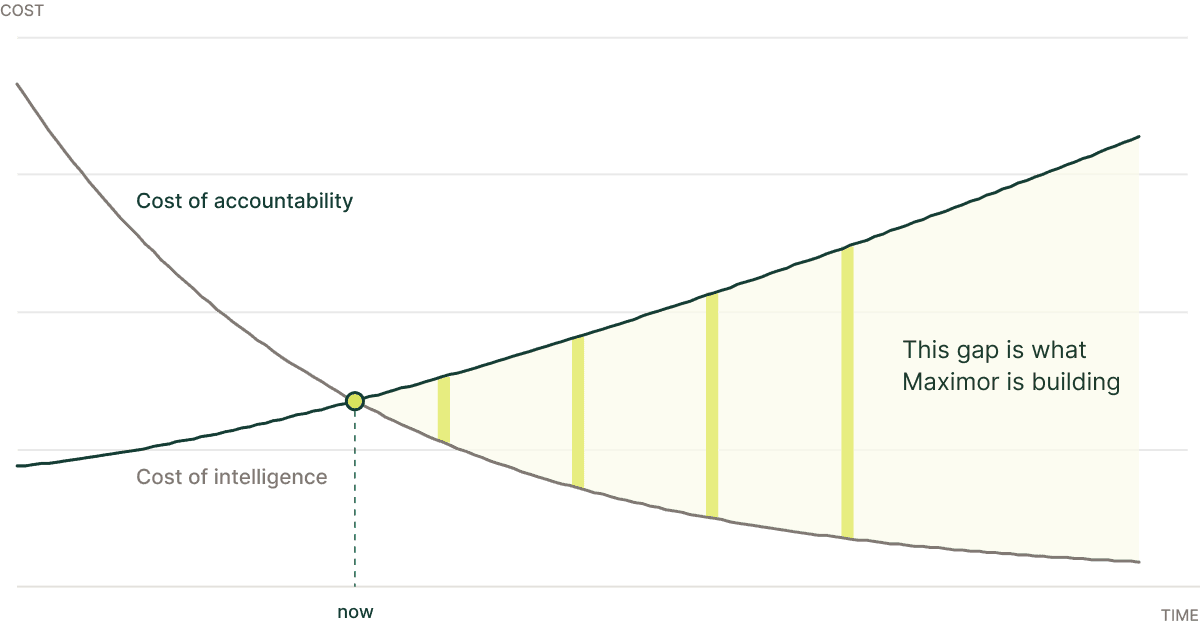
Intelligence is becoming cheap. Accountability is not.
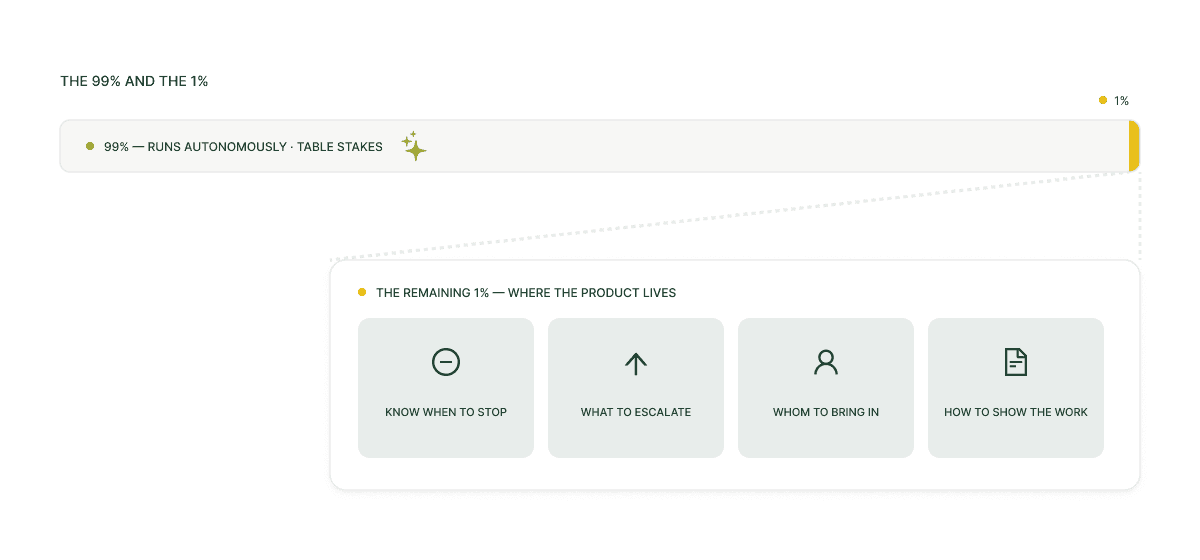
A model can draft a journal entry; the question is who stands behind it – in front of your auditor, your audit committee, your board. Our conviction is that the 99% that runs autonomously is table stakes. Our product is built around the remaining 1%: knowing when to stop, what to escalate, whom to bring in, and how to show your work.
General-purpose AI will not take on that liability. But someone has to.
That is what Maximor is building.
It’s also why we insist on the word autonomous rather than automated. Automated is a script. It does what it was configured to do, and it breaks the moment anything changes.
Autonomous means the system carries the judgment – learns it, applies it, improves it, and knows the boundary of its own confidence.
What changes with Autonomous Finance
Closing, billing, collecting, reconciling, reporting – all of these tasks are keeping the lights on. It’s the part of finance that has to be done perfectly every time. Over time, it became the whole job. When these functions run themselves, two things change.
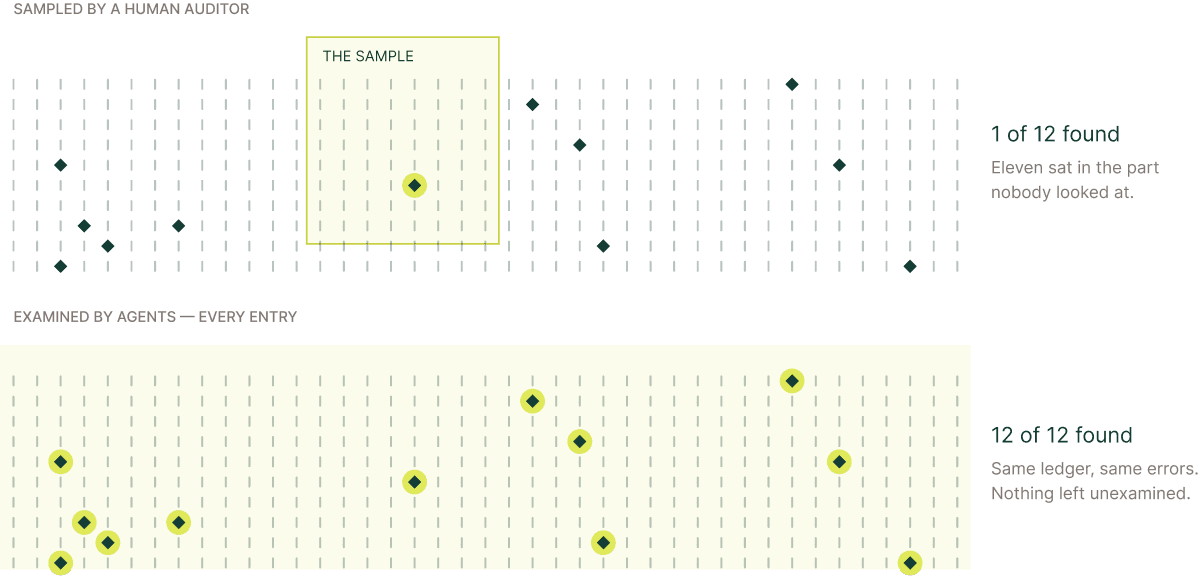
The first thing that changes is trust. Finance has always carried a background rate of error and fraud, priced in as a cost of doing business and discovered at year-end, if at all. That’s because no human auditor can analyze the millions of transactions that take place across an enterprise. So they focus on a small sample and hope it represents the larger picture.
We’ve treated that rate of error as a constant of nature. It’s about to become a variable – one that moves toward zero. When agents do the work, every single entry is examined.
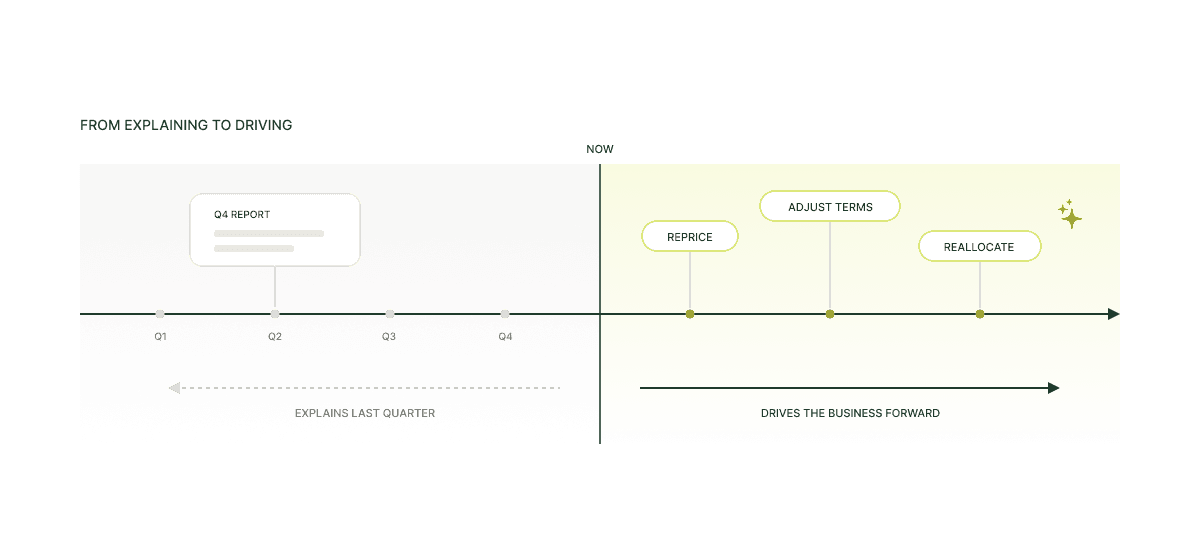
The second thing that changes is tempo. A CFO today allocates capital quarterly, off numbers that are weeks old, and finds out at the end what actually happened.
When we started building Maximor, we asked: Why is pricing revisited once a year? Why are payment terms set at signing and never touched again? Why does every budget get exactly four looks per year? The answer: bookkeeping couldn’t keep up with anything faster.
There’s no law of nature behind the quarterly cadence; it’s an artifact of how long the arithmetic took + the limitations of human scale. Remove those constraints, and finance stops being the department that explains last quarter and becomes the department that drives the business forward.
Where we keep humans in the loop
The word "autonomous" invites the wrong conclusion. The finance professionals we work with didn't enter the field hoping to tick and tie until midnight. That work absorbed them because it had to be done and there was no other way to get it done. There is now. What remains when the machine handles the mechanical is the part that was always the real job: judgment, skepticism, the instinct that a number can be technically correct and still wrong.
People were never meant to be the runtime. They were meant to be the strategic judgment.
At Maximor, we’re building the first finance function where people actually get to do finance.